
BY EM WILLIAMS ’28
With love in full bloom and a whimsical chorus to accompany the show’s end, this semester’s Mainstage show As You Like It, directed by Dennis Schebetta and written by renowned playwright William Shakespeare, opened on November 21st and closed on December 6th. A tale of humor, love, power, disguise, and freedom set in 1910s New York City and the Adirondacks, Skidmore Theater’s adaptation of As You Like It broke all forms of conformity and invited its audience to indulge in their own self-rediscovery.
This sense of free-will and whimsy was introduced from the advent of the production. As the audience and I took our seats, we were greeted by what I’d equate to a serenade. Paper flowers lined the stage’s lip, and crowding the stage, the cast encouraged the audience to join them in cheerful song, while strumming, humming, and playing along on their respective instruments. Guitars, ukuleles, violins, xylophones, maracas, and harmonicas commanded the stage, creating a homey atmosphere as if a local band had come to play for their community rather than the pre-show for a Shakespearean comedy. This was not only a testament to the show’s playfulness, but also to the cast’s chemistry with each other and the audience—a wonderful feature present throughout the entire production. It felt as if the cast was as much their characters as they were themselves as they sang together, sharing glances and gleeful smiles.
The set and costume pieces were also remarkably gorgeous. With floral patterns strewn in an arch over the stage, along with the stained-glass trees and woven branch-like railing features to the staircases, the stage itself illustrated the regality of many of the characters in the Court as well as the nature present later in the show’s dominant setting—the Forest of Arden. Additionally, the costuming tied the characters to nature. Many characters wore flowers in their hair, their clothing, or on the instruments, and were dressed in earthy tones—greens, blues, whites, browns, and grays; their fashion was also heavily inspired by 1910s NYC fashion, wearing looser fitting clothing—tunics, smocks, caftans—small caps with feathers or other added accessories, short pants, business tuxedos, etc.
After a few songs, the lights dimmed and the players introduced their story with “Down by the Salley Gardens.” Laced with themes of youth and opportunity, the song itself asked its listeners to take chances, especially in the case of love—a clear foreshadowing for the romances that took place in the production. This opportunity to share love was also given to the spectators. Grabbing the paper flowers displayed around the end of the stage, the cast wandered into the audience, handing some members the paper flowers—an inherent love letter to the viewers of the show.
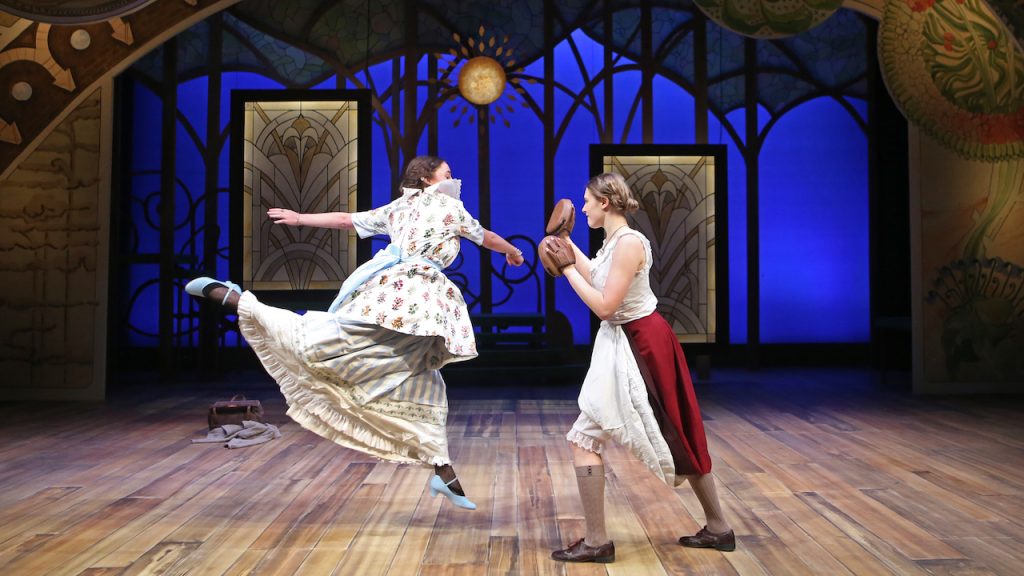
Returning to the stage as the song ended, the cast dispersed, leaving the audience with two of the play’s principal characters, cousins Rosalind (Ken Caron-Quinn ‘27) and Celia (Sky Estrada ‘27), in boxing practice. Distraught over the banishment of her father, Duke Senior (Jae Tolentino ‘28), after her uncle, Duke Frederick (Matthew Bukzin ‘28), usurped his dukedom, Rosalind struggled to find any joy in the Court, throwing her frustrations into Celia’s focus pads. In contrast, Celia was far more optimistic, reassuring Rosalind that she would always be by her side, even promising Rosalind dukedom of the Court after Duke Frederick died, despite Celia being his direct heir—his daughter. Celia’s attempts to make Rosalind “be merry” succeeded, lifting the latter’s mood. The chemistry here between Caron-Quinn and Estrada was immaculate. Not only in this scene, but throughout the entire show. Scholars have highlighted the relationship between Rosalind and Celia to linger along the lines of homoeroticism due to the duo’s inseparability and warm exchanges, but beyond the implicitly, both actors effectively conveyed a loving and trusting bond that I admired and felt truly connected with throughout the production.
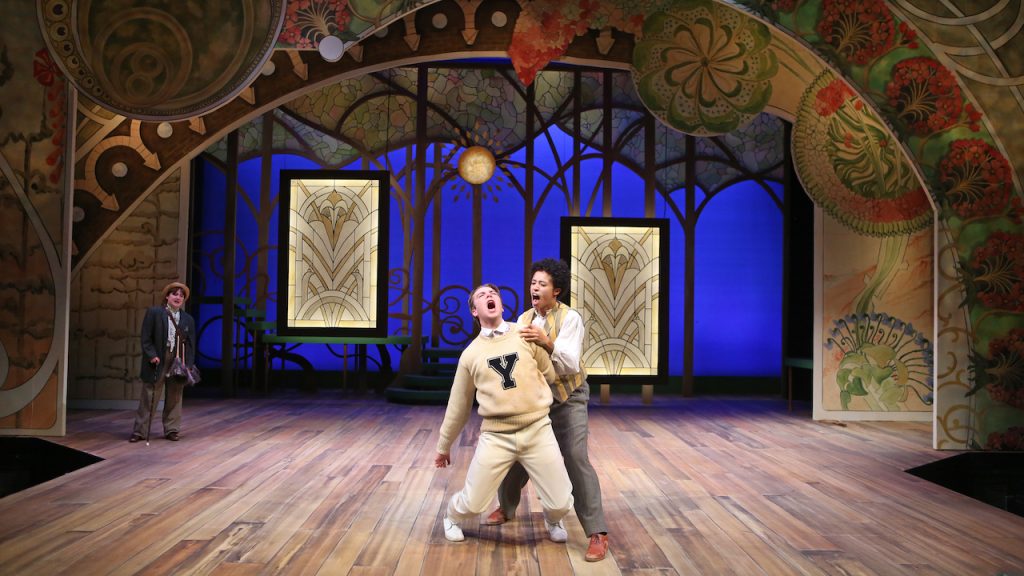
On the contrary, the following scene introduced two brothers at odds: Orlando (Sydney Mann ‘27) and Oliver (Asa Baker-Rouse ‘28). The youngest son of the late Sir Rowland de Boys, Orlando argued that Oliver had not held true to their father’s will, withholding Orlando of his fortune and the promise of a higher education. When Oliver was quick to dispute him, the two engaged in a brawl, but in a sibling-like squabble that left the audience roaring with laughter. In the end, Orlando won and Oliver mockingly threw a few coins to the ground to “contribute” to his brother’s fortune, asking him to leave. Orlando conceded, leaving Oliver to his lonesome; however, not before being joined by the Court’s wrestler, Charles (Sean Robertson ‘29), who informed Oliver that Orlando had challenged him to a wrestling match, which Oliver promptly endorsed and encouraged his brother’s downfall.
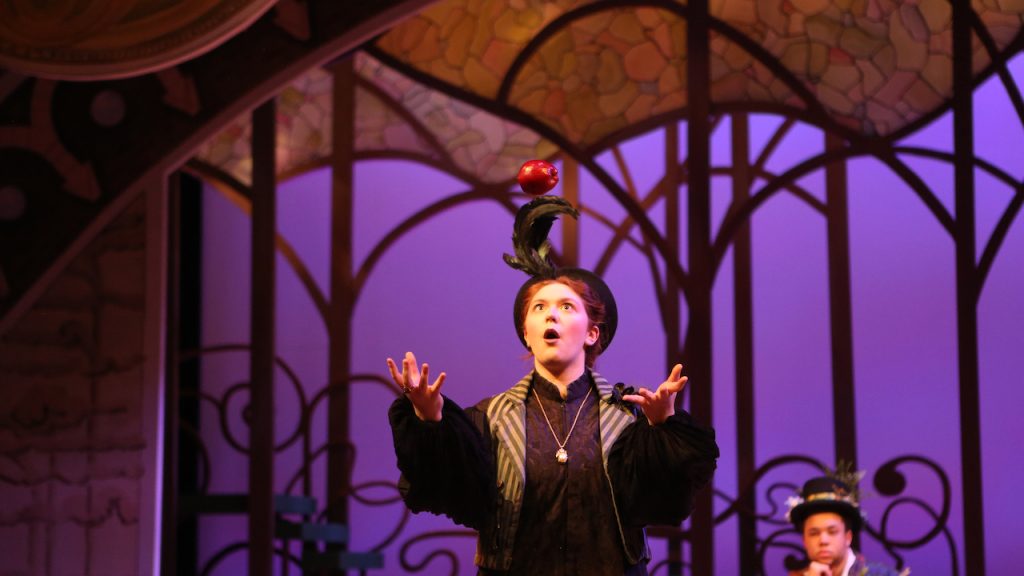
The next day, the audience was introduced to the Court’s Fool, Touchstone (Jordan Azzinaro ‘26), who quickly made a strong impression with his wit and comical stunts, juggling as he entered with Rosalind and Celia. Hastily after, the trio were joined by one of the Court’s courtiers, Le Beau (Jude Gwak ‘28). Though Le Beau was a minor character, Gwak’s characterization stole the scene for me. Their french accent and mannerisms perfectly complemented Le Beau’s uptight persona as the Court’s attendant as well as provided a comical caricature that the audience couldn’t get enough of. Le Beau’s presence was not without reason however as he informed the other players of the imminent wrestling match between Orlando and Charles, which they agreed to spectate.
It was then that the match began. The cast, lined up upstage in the stands, cheered as Oliver and Charles prepared to fight. The best part of this prelude for me was Touchstone trying to copy Charles showboating moves. Azzinario’s characterization and facial expressions for Touchstone while attempting to mimic Charles’ great feats added to the chaos of the scene—the best part being when Robertson bent the ‘metal bar’ and Azzinario attempted to do the same with their cane. Rosalind and Celia learned of Orlando’s motivations to earn some money through the fight in order to support himself, leading the two women to rally behind him. When the fight ensued, pure slapstick paraded itself across the stage. Fight Director Mike Magliocca’s choreography in this segment was absolute gold as the men attempted to take the other down, swinging punches and jumping onto each other’s backs; The best part was at the end when Orlando KO’s Oliver with a sneeze. Impressed by his talents, Duke Frederick asked Orlando for his name, but when he learned he was of the de Boys, he scorned him, noting Orlando’s father to be his enemy. When he left, Celia and Rosalind properly met Orlando, and taken aback by his ability to fight, Rosalind fell head over heels for him. After expressing his appreciation for Rosalind’s support through an awkward, shy exchange, Orlando was left to himself where he too realized he had fallen for her.
Shifting to the Court lounge area where two crystal chandeliers were suspended above the scene, Rosalind and Celia discussed Rosalind’s sudden likeness for Orlando, which Celia kindly teased her about before being interrupted by Duke Frederick in a fit of rage. In a turn of events, the Duke banished Rosalind from the Court on behalf of her relation with the exiled Duke, which Rosalind and Celia angrily protested, but were unsuccessful as the Duke threatened Rosalind to leave or she would be sentenced to death. In rebellion, the cousins giddily agreed to seek refuge with the usurped Duke in the Forest of Arden—or in this adaptation, the Adirondacks. Worried of what dangers they may find, the two decided to disguise themselves as common folk, with Celia taking on the name Aliena and Rosalind disguising herself as a man, Ganymede. Thus now prepared for their journey, the two set off into the unknown nature of Arden.
Following suit, Duke Senior and the exiles of the Court made themselves known. In contrast to the previous scenes, the characters in this scene seemed to take in the world slowly and were not spiteful of their banishment, but rather relished in nature’s blessings and freedom. Yet, in an interesting juxtaposition to such peaceful ventures, the exiles, or Foresters, then spoke of the graphic death of their recently hunted stag. The theme of the hunted deer was also brought up in a later scene to illustrate how though the Foresters were victims of Duke Frederick’s illegitimate authority, they were also inevitably punished to commit a similar disobedience to law and order: becoming usurpers of a land not of their own—the Forest of Arden.
Shifting briefly back to the Court/City, Duke Frederick was outraged by Celia and Rosalind’s disappearance, blaming Orlando and calling upon Le Beau to send his brother, Oliver, to find him; but, the audience then found that the Duke was too late as Adam (Theo Leff ‘28), the de Boys old servant, found Orlando first. Adam warned Orlando that he must leave as the Duke was after him, and though Orlando showed some reservations, Adam provided him a great fortune and assured the young man that he will accompany him as “though I look old, yet I am strong and lusty.”
Back in the Adirondacks, Rosalind and Celia were accompanied by Touchstone, who pushed along a trolley full of suitcases with a comically exhausted Celia on top. Though I could imagine that the piece was made light enough to be pushed without too much labor, Azzinaro sold Touchstone’s displeasure and discomfort in having to push not only the unnecessary amount of luggage, but also Celia who was, humorously, not equipped for the adventurous life. As the group ventured on, they were greeted by two old shepherds, Corin (Milo Scowden ‘28) and Silvius (Garin Miner Drewes ‘28). The latter, a dreamer who wished for one Phoebe (Alyssa Galen ‘27) to love him, and the former, a more reasonable and wise individual who offered shelter to the trio; Even after Touchstone’s initial attempts to seek shelter in which he greeted Corin with a whistle blow and called him a clown—much to Rosalind’s embarrassment.
The Foresters then returned with a melancholic noblewoman Jacqueline (Sophie D’Amore ‘26), who relished in her own brooding, aided by the singing of Amiens (Naomi Wagner ‘26), a Forester and former lord. Wagner’s voice had such a beautiful, folk-like sound to it that could tell a hundred stories in one tale—it was both haunting and all-knowing, which I felt fit perfectly with Amiens’ character. After Amiens’ first song, Jacqueline begged for another, and another—until she conceived her own verses in stark contrast to Amiens’ melody, uniting the Foresters into a circle and noting them all as fools. Jacqueline, the unofficial fool of Duke Senior’s Foresters, served as a foil to Touchstone’s optimism—relying on self-pity and pessimism to carry forward her comical avenues.
In the subsequent scenes, Adam and Orlando, deprived of food and shelter, grew desperate for any destination to call their home, and found the Foresters having a picnic. Though Orlando was hostile at first due to the tribulations of their journey, Duke Senior quickly welcomed him and Adam into his camp. Orlando questioned Duke Senior’s kindness—particularly because he had ambushed them, but the Duke understood his suffering and stated that they, the Foresters, weren’t the only ones unhappy with their given circumstance. Jacqueline then delivered one of the most famous monologues of the show, in which she commented on the inevitably and suffering of human existence, in which all beings are born, forced to perform their stages of life, and then die—a miserable, yet eye-opening concept that had me reading it back even after seeing D’Amore masterly perform it twice on stage.
Though we briefly returned to the Court where Duke Frederick had grown frustrated that Orlando hadn’t been found, and thus sent Oliver out to the Forest of Arden to retrieve his brother, what followed in the next scene quickly deviated from the potential sour conflict ahead. Orlando entered with a shoulder bag stuffed with poems that he stuck around the set, passionately proclaiming his love for Rosalind. Mann’s performance in this scene was among my favorites in the production. The way in which they spread themselves far and wide across the stage and into the audience, throwing the poems about and handing individual pieces to the audience, really solidified Orlando’s ambitions and built on the extravagant personality of Orlando’s character.
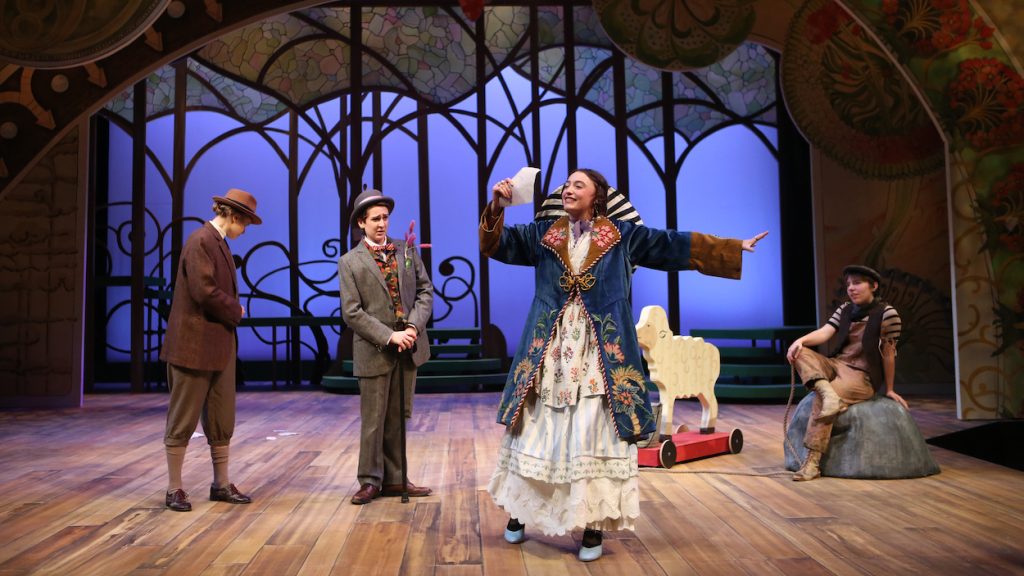
’27), Corin (Milo Scowden ’28)
After Orlando had fled the scene, and Corin and Touchstone debated over the principals and value of living in the Court versus the forest—a nod to the power imbalance between several characters, Rosalind and Celia discovered Orlando’s love letters. Fawning over them, the cousins wondered why Orlando was near and not in the Court, unaware of the target put on him. Orlando then entered again with melancholic Jaqueline who groaned and mocked his work, even critiquing Rosalind’s name, as she could not handle the amount of pure love and joy put into them. Realizing they could not settle their differences on the matter, Jacqueline vacated the scene, leaving Orlando, and Rosalind and Celia, who were hidden off to the side.
Still disguised as Ganymede, Rosalind decided to play a joke on him, introducing herself as a Forester. The two playfully bantered and though Orlando did not know that Ganymede was Rosalind, he fonded over him all the same, which attributed to queer themes consistent throughout this production. Rosalind then pretended to find one of Orlando’s poems and ripped it up, stating that she, Rosalind, was worthy of more and playfully commanded Orlando to meet her at her cottage for lessons on how to properly woo “Rosalind.” Orlando accepted her preposition as a means to achieve Rosalind’s love, but also potentially and subconsciously in order to spend more time with one mysterious Ganymede.
As You Like It’s second half was where love truly blossomed. The audience was introduced to Touchstone’s lover, Audrey (Audrey Tignor ‘27), a flirty, simple country woman whose lifestyle existed in direct contrast to Touchstone’s life in the court. But, they found themselves a match together regardless. This was particularly clear in their costuming, in which they were both adorned in colorful fabrics and they both had floral accents. One had flowers in her hair—Audrey—and the other in his lapel—Touchstone.
Then, a romantic quarrel struck as Orlando did not appear for his daily lesson at Rosalind and Celia’s cottage, leaving Rosalind in dismay; however, her mood is quickly lifted by Corin who invited the cousins to witness another lovers’ quarrel—Silvius once again failing to achieve Phoebe’s affections. Finally, meeting the beloved in question, the audience found that Phoebe was actually quite scornful of Silvius but, upon Rosalind’s intrusion in which she tried to settle the romantic mess, was enamored by the woman’s presence in her manly disguise—much to Rosalind’s dismay and horror.
During their next lesson, Orlando showed up, but an hour late to which Rosalind condemned. However, the two quickly fell back into their banter and Rosalind further prepared Orlando on how to sweep her off her feet. With the help of Celia, who painted off to the side, the two even practiced their vows. When Orlando left, Celia scolded Rosalind for constewing her lesson in a way that demeaned women; however, Rosalind, often a pessimist of love, said she used her wit, and saw her approach as rather a means to strip all standards of the gender in order to prepare herself and Orlando for what a true relationship was beyond romance.
When Orlando and Rosalind were meant to meet again, it was rather Oliver who came, having found his way through the forest. Disheveled, Oliver informed Rosalind and Celia that Orlando saved him from being attacked by a Lioness and gave him shelter with Duke Senior. Showing a bloody handkerchief, he told Rosalind that Orlando had sent him to tell her that he was injured but would recover. This interaction acted as a turning point in Oliver’s character from scorn and hate towards his brother to deep admiration for his selflessness and determination to ensure his safety.
Then came my favorite scene, the commedia lazzi—which also happened to be an added scene by Schebetta into this production. While Amiens and the Foresters sang to “Leaving of Liverpool,” the lovers chased each other in an adorable display of each pair’s relationship dynamic and its quirks. My most beloved dynamic in this scene was between Silvius and Phoebe. Though their characters were always at odds, Miner Drewes and Galen’s interactions were so physically engaging, with Miner Drewes’ silly run after Phoebe, and their ending chase where Galen took hold of Silvius’ ukulele, lifting it above her head as she threateningly stormed after him.
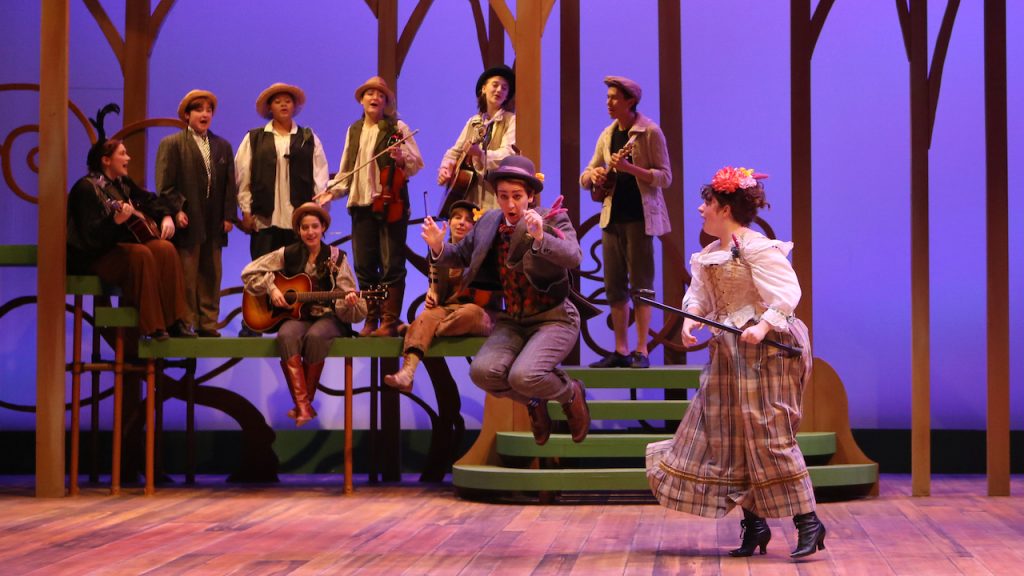
In the penultimate scene, Oliver informed Orlando that he had fallen for Celia and planned to ask for her hand in marriage, giving up his life in the Court and offering up more of their father’s inheritance to Orlando. Orlando consented to such an arrangement, and after Oliver left, Rosalind entered and the two reunited. Though he admitted to being happy for his brother, Orlando felt unhappy and was no longer satisfied with wooing Rosalind as Ganymede to replace the real thing. In response, Rosalind performed a magic trick and contended that if Orlando loved her as much as he did, they would be married the next day. Following suit, Silvius and Phoebe entered and Rosalind attempted for the final time to encourage Phoebe to find love in Silvius. When she failed the conventional way, Rosalind cleverly stated to Phoebe, Silvius, and Orlando that everyone would be wed tomorrow, giving each character the hope that their dreams would be fulfilled.
With all parties present—including all lovers to be wed, Rosalind put her plan into action. Undisguising herself from Ganymede to Rosalind as well as ‘Aliena’ revealing herself to be Celia, the cousins reintroduced themselves to the crowd. Duke Senior finally reunited with Rosalind, his daughter, and Orlando’s dream became a reality—to see his beloved again. Then, representing the god of marriage, Hymen, and dressed in white and gold robes, Corin appeared to undo the confusion and wed the four pairs, but not before the Foresters—old and new—were given unexpected news. Jack (also Sean Robertson ‘29), Oliver and Orlando’s brother, declared to the cast that Duke Frederick had abandoned the Court in favor of a life in the monastery after finding peace from a hermit. This revelation caused all parties to realize that they could return to the Court, and they rejoiced—including Jacqueline, but not in the same manner. Eyes opened by the prospect of a life of solitary in the monastery, Jacqueline took her leave to remain within the forest. Her reaction conveyed not only her advert personality in comparison to the rest of the cast, but also illustrated how she didn’t conform to societal expectations and bridged her own path. Though it may not appear to be a ‘happily ever after’ if not in love or company, Jacqueline’s peaceful end was with herself and being true to what she wanted in her own life.
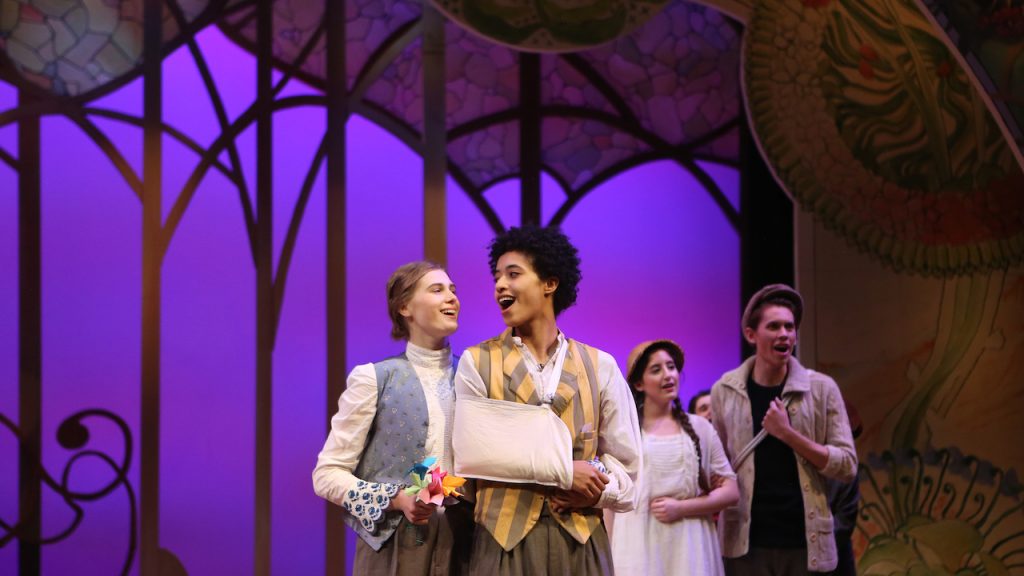
As the lovers were wed, the cast sang “Wild Mountain Thyme” and soon after their voices faded into a hum as Rosalind walked forward. In a final form of wit, she broke the fourth wall and stepped out of her character into who in Shakespearean times would be a male actor—a nod to how gender can be disguised and blurred throughout a play and out in the real world. Caron-Quinn invited the audience to enjoy the production as it is told and how it ends, bidding us farewell as the cast sang the chorus one final time.
It is difficult to feel joy when we exist in a time where who and why we love is used as a means to act on prejudice. However, Skidmore Theater’s Mainstage reminded me that though life is a performance in which we suffer and take on different roles, there is always something beautiful to behold within it. Whether that be someone to love, something to be passionate about, or some other venture, in our limited time, we all have the opportunity to pursue our lives ‘as we like it’ and to stay true to ourselves—as we dutifully deserve.
Photos by Sue Kessler
***
Em Williams ’28 is a staff writer for the Skidmore Theater Living Newsletter